


 407-450-2020
I need to retrieve the information from the previous workflow steps to generate the blog post. Let me gather the Article Details, Internet Search data, and Article Selector results.
Protective Coatings for Warehouses in Apopka: Industrial-Grade Protection That Extends Equipment Life
Orlando-area warehouses face a relentless assault from humidity, moisture, and chemical exposure—yet most facility managers overlook one critical defense: industrial-grade protective coatings. With Central Florida’s high water table, frequent flooding, and intense UV radiation, unprotected concrete slabs, structural steel, and exterior walls deteriorate rapidly, leading to costly repairs and operational downtime.
Warehouses and industrial facilities in Apopka need more than paint. They need engineered coatings systems designed specifically for the demanding Central Florida climate and the harsh realities of logistics operations. Overtop, a licensed and fully insured painting company serving the Apopka region for over 21 years, specializes in industrial-grade protective coatings that safeguard your facility, extend equipment life, and protect your bottom line.
Why Standard Paint Fails in Warehouse Environments
Standard interior and exterior paint is designed for residential settings with controlled conditions. A warehouse demands something far more robust.
The problem compounds in Apopka and surrounding industrial areas. Concrete slabs absorb moisture from the high water table beneath the facility, creating vapor pressure that causes paint to bubble and peel within months. Chemical exposure from forklifts, cleaning agents, and stored materials degrades conventional coatings at an accelerated pace. Moisture-driven concrete deterioration—a phenomenon well-documented in remediated industrial sites across Central Florida—undermines structural integrity when protective systems aren’t engineered correctly.
Florida’s humidity and temperature swings stress coatings daily, causing adhesion failure, chalking, and mildew growth. Without vapor-barrier systems and moisture-control coatings, your warehouse floors, walls, and structural elements become vulnerable to the very threats that flood-restoration companies address after disasters strike. The difference is that protective coatings prevent those disasters in the first place.
Industrial-Grade Coatings: The Foundation of Warehouse Longevity
Protective coatings for warehouses aren’t one-size-fits-all. They’re engineered systems selected based on:
- Substrate type: Concrete slabs require epoxy or polyurethane coatings that bond to the porous surface and resist moisture vapor transmission.
- Chemical exposure: Facilities storing solvents, oils, or caustic materials need chemically resistant topcoats rated for specific hazards.
- Traffic intensity: Loading docks, ramps, and main aisles require industrial-strength epoxies or polyaspartic coatings that resist abrasion from forklifts and pallet jacks.
- Environmental risk: Facilities near water tables or flood zones need moisture-barrier systems that prevent capillary action from compromising the concrete structure.
- Climatic stress: Central Florida’s UV rays, salt air (near coastal regions), and thermal cycling demand UV-stable topcoats that won’t chalk or fade.
Overtop works with facility managers to assess these factors and specify coatings that match your warehouse’s unique operational profile. Rather than recommending the cheapest solution, they prioritize durability and long-term cost savings—a quality-over-quantity philosophy that aligns with the protective standards emerging from remediated industrial sites across the region.
Concrete Floor Coatings: Performance Under Pressure
Warehouse concrete floors endure constant mechanical stress and moisture infiltration. An uncoated or poorly coated slab will develop fissures, spalling, and efflorescence—white crystalline deposits indicating moisture movement through the concrete—within a few years.
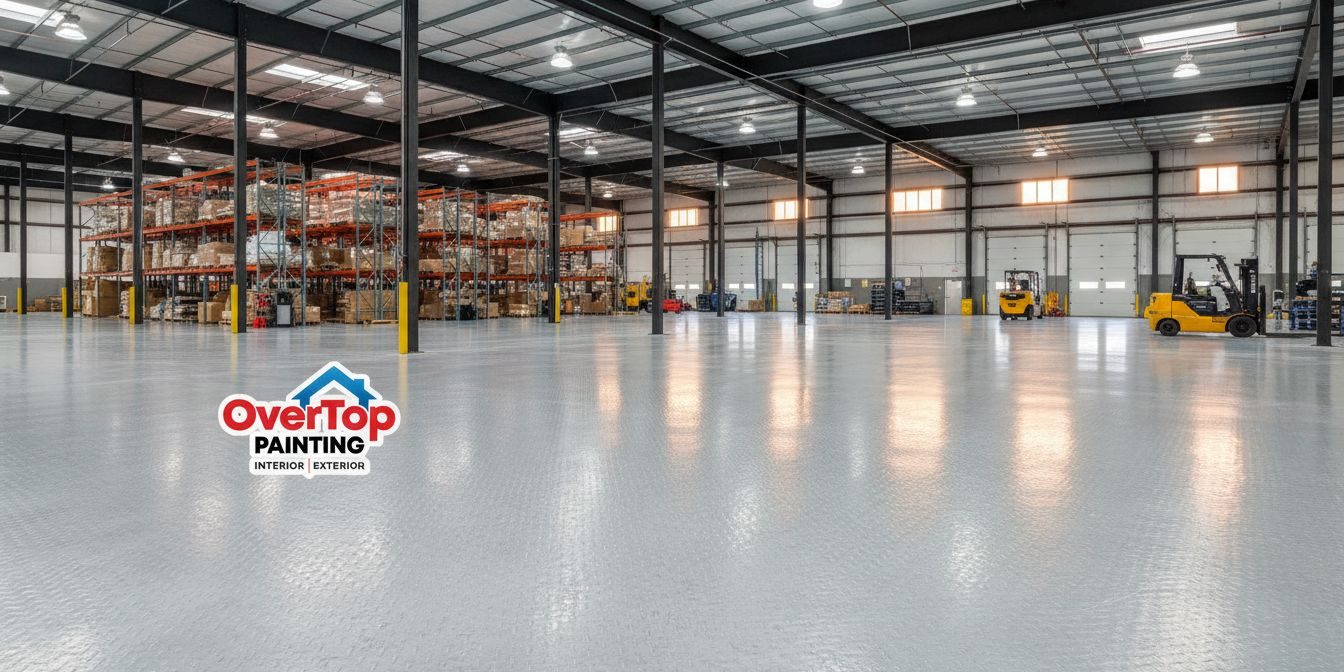
Multi-layer epoxy systems are the industry standard for high-traffic warehouse floors. They begin with surface preparation (grinding, cleaning, and priming to ensure adhesion), followed by a moisture-barrier primer that blocks vapor transmission from below, then intermediate epoxy coats for durability and chemical resistance, and finally a topcoat offering slip resistance and UV stability. This assembly provides years of protection against oils, water, salt, and mechanical wear.
Polyurethane and polyaspartic coatings offer faster cure times and superior flexibility—critical advantages when your facility can’t afford extended downtime. These systems are ideal for loading docks, ramps, and outdoor concrete pads exposed to temperature cycling and thermal stress.
For facilities with ongoing flood or moisture risk, vapor-barrier systems add a secondary defense layer, preventing moisture from wicking up through the concrete and destabilizing the coatings from below. This is especially important in Apopka and surrounding areas where seasonal water-table fluctuations are common.
Structural Steel and Metal Protection
Warehouse structures—roof beams, columns, loading-dock frames, and outdoor metal shelving—corrode silently when exposed to humidity and salt-laden air. Rust not only looks unprofessional; it weakens structural integrity and creates liability during inspections or insurance claims.
Industrial epoxy primers bond directly to steel and provide a moisture barrier that prevents rust formation. Polyurethane topcoats add UV resistance and durability against chemical splashes. For facilities storing corrosive materials, specialized marine-grade or chemical-resistant systems prevent coating failure and extend structural lifespan by decades.
Overtop’s experience with commercial and industrial projects means understanding which coatings perform under extreme conditions—something standard painting contractors often overlook because their portfolio focuses on residential work.
Exterior Walls, Soffits, and Fascia: Durable Finishes That Withstand Florida Weather
Warehouse exteriors face unforgiving conditions: intense sun, heavy rains, wind-driven moisture, and thermal stress that causes expansion and contraction. Paint applied without proper preparation or using substandard materials fails within 2–3 years in Central Florida.
Protective coatings for warehouse exteriors require:
- Moisture-resistant primers that seal substrates and promote adhesion despite humid conditions.
- High-build epoxies or polyurethanes that provide thickness and durability, resisting UV degradation and moisture infiltration.
- Breathable topcoats that allow substrate moisture to escape while preventing liquid water penetration—critical for preventing trapped moisture that causes mold and structural damage.
Soffits and fascia boards are particularly vulnerable because they’re often overlooked during routine maintenance. Water pooling on poorly sealed fascia leads to wood rot and structural failure. Overtop includes soffit and fascia board replacement and coating as part of comprehensive warehouse protection, ensuring no vulnerability is left unaddressed.
Flood Risk Management Through Protective Coatings
Apopka’s industrial areas sit in regions with high flood risk due to aging stormwater infrastructure, seasonal high water tables, and intense summer rainfall. While coatings alone won’t prevent flood inundation, they dramatically reduce damage when flooding occurs.
Epoxy and polyurethane coatings on concrete floors minimize water absorption during flood events, meaning faster drying and less structural compromise after water recedes. Moisture-barrier systems prevent the capillary wicking that causes long-term concrete deterioration post-flood.
Vapor-barrier coatings on walls and structural elements reduce the evaporation time needed to dry out saturated materials. This is critical because prolonged moisture creates mold, degrades structural materials, and contaminates inventory stored near walls.
Facilities near known Superfund or remediated sites—where groundwater contamination or landfill proximity increases risk—benefit even more from engineered coating systems. These barriers provide an additional layer of protection against vapor intrusion and contamination, complementing groundwater monitoring and institutional controls.
The Overtop Advantage: 21 Years of Industrial Expertise
Overtop has spent over two decades building a reputation as one of the few 5-star rated painting companies on Google in the Orlando region. For warehouses and industrial facilities, this experience translates to:
- Licensed and fully insured: Commercial liability and workers’ compensation ensure your facility is protected during coating application.
- Precision specification: Overtop assesses your facility’s specific risks—flood exposure, chemical storage, structural condition—and recommends coatings designed for long-term performance, not just short-term savings.
- Quality craftsmanship: Their detail-oriented approach means proper surface preparation, correct application techniques, and meticulous cleanup—the difference between a coating that lasts five years and one that lasts twenty.
- Honest communication: No surprise fees, fair estimates, and straight-to-the-point consultation mean you understand exactly what you’re paying for and why.
- Always on time and on budget: Downtime is expensive for warehouses. Overtop’s reliability ensures your facility is back to full operation on schedule.
Concrete Floor Coating Benefits: ROI and Long-Term Savings
The question isn’t whether protective coatings are worth the investment—it’s whether you can afford not to have them.
Uncoated concrete floors require replacement every 8–12 years in high-traffic warehouse settings. Removal, disposal, and replacement cost $5–$12 per square foot. A 10,000-square-foot warehouse floor replacement runs $50,000–$120,000, plus operational disruption and inventory management complications.
Well-maintained epoxy-coated floors last 15–20+ years with periodic cleaning and touch-ups costing $0.50–$2.00 per square foot annually. A 10,000-square-foot floor protected by Overtop’s coatings costs approximately $20,000–$40,000 upfront, then $50–$200 per year in maintenance—a fraction of replacement costs.
Beyond durability, protective coatings deliver operational benefits:
- Improved visibility and safety: Light-colored epoxy floors reflect light, reducing energy costs and improving visibility in aisles and work areas.
- Easier cleaning and maintenance: Sealed surfaces resist oil absorption and chemical staining, simplifying sanitation protocols.
- Professional appearance: Well-coated warehouses attract better clients, support higher lease rates, and facilitate faster property turnover.
- Documentation for compliance: Facilities near remediated sites or contamination zones benefit from coatings as part of institutional controls and risk-management documentation.
Common Warehouse Coating Failures and How to Avoid Them
Understanding why coatings fail helps you make smarter specifications:
Surface preparation shortcuts are the leading cause of coating failure. Dust, rust, moisture, and mill scale prevent adhesion. Overtop invests time and resources in comprehensive surface cleaning—grinding, pressure washing, and priming—because they understand that a coating is only as good as the foundation it’s applied to.
Moisture problems manifest when contractors apply coatings over damp concrete or without vapor-barrier primers. The coating traps moisture below, leading to bubbling, peeling, and adhesion failure. Overtop conducts moisture testing and specifies vapor-barrier systems appropriate to your floor’s exposure.
Incorrect product selection occurs when contractors default to residential-grade paints or single-component systems that don’t match warehouse demands. Overtop’s industrial background ensures the right epoxy, polyurethane, or polyaspartic system for your specific application.
Application errors—improper mixing, incorrect film thickness, or poor technique—compromise performance. Overtop’s licensed craftspeople follow manufacturer specifications exactly, ensuring coatings perform as engineered.
Inadequate topcoat selection means choosing UV-sensitive or slip-prone finishes in high-traffic areas. Overtop recommends topcoats engineered for your warehouse’s specific risks: chemical resistance, slip resistance, durability, or UV stability.
Getting Started: Warehouse Coating Assessment and Specification
If you manage a warehouse or industrial facility in Apopka or surrounding Central Florida cities, the first step is a professional facility assessment. Overtop’s consultants evaluate:
- Current concrete and structural conditions
- Moisture exposure and flood risk
- Chemical storage and operational hazards
- Traffic patterns and wear zones
- Budget and timeline constraints
- Compliance requirements or contamination-zone considerations
From this assessment, Overtop specifies a coating system designed for long-term durability and your facility’s unique needs. You’ll receive a clear estimate, honest timeline, and recommendations prioritizing value over volume.
Contact Overtop at (407) 450-2020 or visit their website to discuss your warehouse’s protective coating needs. They serve Apopka, Orlando, and surrounding Central Florida industrial areas with the professionalism and expertise that has earned them their 5-star reputation. Your facility’s longevity—and your bottom line—depends on coatings that work as hard as your operation does.


