


 407-450-2020
I need to retrieve the specific information from the previous workflow steps to write the blog post. Let me gather that data now.
Warehouse Epoxy Floor Coatings for Orlando Distribution Centers
Central Florida’s logistics and distribution sector is booming. Orlando’s warehouse vacancy rate sits at just 7.0–7.2%, and rents are climbing by 7–9% annually as major fulfillment hubs and theme-park supply chains expand across the region. Behind every efficient distribution center, though, is a critical but often overlooked asset: a durable, protective floor finish that can withstand forklift traffic, chemical spills, and the relentless wear of high-throughput operations.
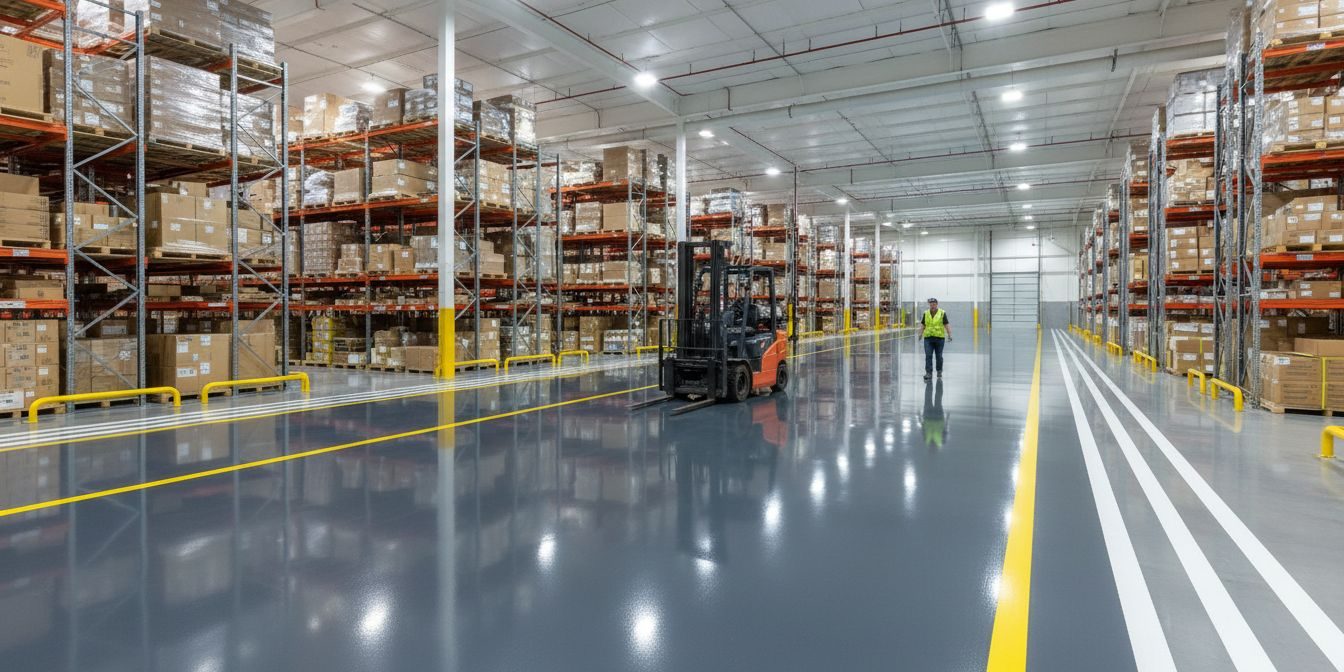
If you manage or own a logistics hub in the Orlando area, your warehouse floor isn’t just a surface—it’s part of your competitive advantage. Epoxy and polyaspartic floor coatings provide the slip-resistant, chemical-resistant protection that keeps your operations safe, compliant, and moving forward without costly downtime.
What Makes Epoxy Flooring Essential for Warehouse Operations
Traditional concrete floors in warehouses suffer from the moment heavy machinery rolls across them. Forklifts create stress fractures, moisture creeps in through porous concrete, chemical spills from vehicle fluids penetrate the surface, and dust and debris cloud the air. Over time, peeling, chipping, and cracking floors create safety hazards, disrupt traffic flow, and force expensive repairs.
Epoxy floor coatings solve this problem at the source. They create a sealed, impenetrable barrier that bonds directly to concrete, forming a tough protective finish. High-performance epoxy systems deliver:
- Compressive strength to handle point loads from forklifts and pallet jacks without cracking or flexing
- Chemical resistance to oils, cleaners, and vehicle fluids common in distribution facilities
- Slip-resistance engineered for safety in aisles, loading docks, and battery-charging areas
- Fast installation that minimizes downtime—critical when your distribution center can’t afford to shut down
- Easy cleaning with high-traffic loading bays staying pristine for longer
Polyaspartic and polyurea hybrid systems offer even faster cure times, sometimes allowing partial traffic within 24 hours of application, making them ideal for facilities that cannot afford extended closures.
Surface Preparation: The Foundation of Long-Lasting Results
Many warehouse floors fail prematurely not because the epoxy itself is defective, but because the concrete beneath wasn’t properly prepared. Sealed concrete, old coatings, and surface contaminants prevent the epoxy from bonding correctly, leading to peeling and chipping within months.
Professional preparation is non-negotiable. This means:
- Grinding or shot-blasting to remove old coatings and polish the concrete surface
- Filling cracks and low spots to create an even substrate
- Cleaning with solvent or degreaser to eliminate oils and dust
- Testing for moisture to ensure the concrete won’t trap water beneath the epoxy
In Orlando’s humid subtropical climate, moisture testing is especially critical. High humidity and seasonal water infiltration can compromise epoxy adhesion if not addressed before application. A reputable contractor will use moisture meters and ensure the concrete meets industry standards (typically a moisture vapor emission rate below 3 lbs/1000 sq ft/24 hrs) before beginning work.
Choosing the Right Epoxy System for Your Facility
Not all epoxy floor coatings are created equal. Distribution centers have different operational demands, and the right system depends on your specific use case.
Heavy-Traffic Warehouse Floors
For facilities with constant forklift traffic, heavy point loads, and high throughput, a two-part epoxy with a polyaspartic topcoat provides maximum durability and wear resistance. These systems cure fast and maintain color stability under UV exposure, preventing fading in bays with skylights or open doors.
Chemical-Resistant Coatings
If your distribution center handles oils, solvents, cleaners, or other caustic materials, specify an epoxy formulated for chemical resistance. These systems resist degradation from vehicle fluids, battery acid, and industrial cleaners, keeping your floor performing even in the harshest conditions.
Non-Skid and Safety-Enhanced Finishes
Loading docks and high-traffic pedestrian areas benefit from epoxy with built-in aggregate or slip-resistant additives. These finishes reduce trip-and-fall hazards while meeting OSHA safety standards, protecting both your workforce and your liability exposure.
Seamless Floor Striping and Demarcation
Beyond the base coating, your distribution center can achieve optimal traffic flow with professional line striping. Epoxy-based or paint-marked lanes delineate forklift traffic, pedestrian walkways, evacuation routes, and staging areas. Safety aisles and caution zones keep operations organized and compliant with regulations, while electrostatic-dissipative (ESD) systems are available for facilities handling sensitive equipment or electronics.
The Paint and Coatings Market Landscape for 2026
The protective coatings industry is experiencing measured but steady expansion in 2026. Professional-grade epoxy and resin systems are increasingly accessible through regional distribution networks and e-commerce logistics hubs that reduce lead times and jobsite downtime. Construction and industrial maintenance investments are strong, particularly in high-growth regions like Central Florida, where new distribution facilities and renovation projects are creating continuous demand for durable floor finishes.
For Orlando distribution center managers, this means more competitive pricing, faster material delivery, and access to cutting-edge low-VOC (volatile organic compound) epoxy products that perform brilliantly while supporting indoor air quality and worker safety.
Installation Timeline and Minimizing Downtime
One of the biggest concerns for logistics facilities is downtime during flooring work. Professional contractors understand this pressure and structure projects to minimize operational disruption.
A typical epoxy floor coating project in a warehouse environment follows this timeline:
- Surface preparation (1–3 days, depending on floor size and existing condition)
- Primer application (1 day, with typical recoat in 4–8 hours)
- Base epoxy coating (1 day, with initial foot traffic possible in 24–48 hours)
- Topcoat and finishing (1 day, with full cure in 3–7 days before heavy machinery returns)
Fast-curing polyaspartic systems can compress this timeline significantly, sometimes allowing partial operations to resume within a day of the final coat. Experienced contractors will coordinate with your logistics team to schedule work during planned maintenance windows, shift changes, or lower-traffic periods.
Ongoing Maintenance Extends Coating Life
Investing in an epoxy floor is only the beginning. Proper maintenance ensures decades of reliable performance and maximizes your return on investment.
Maintenance essentials for warehouse epoxy floors:
- Regular sweeping to remove debris and prevent abrasive particles from scratching the surface
- Spill response protocols for oils, chemicals, and solvents—clean up promptly to prevent staining or degradation
- Periodic deep cleaning with neutral cleaners; avoid harsh acids or alkaline cleaners that can etch the epoxy
- Inspection for wear zones, particularly in loading docks and high-traffic forklift lanes, where the coating experiences the most stress
- Touch-ups and localized repairs when minor damage occurs, preventing small chips from spreading into larger failures
- Scheduled recoating of high-wear areas every 5–10 years, depending on traffic intensity and environmental conditions
In humid environments like Central Florida, moisture management and regular cleaning are critical to prevent mold growth and maintain the coating’s slip-resistant properties.
Why Local Expertise Matters for Orlando Facilities
Selecting a contractor for warehouse epoxy flooring isn’t just about price—it’s about knowing the local climate, building codes, and operational realities of Central Florida’s logistics sector. A contractor with deep experience in Orlando-area distribution centers understands the specific challenges posed by our humid climate, the importance of moisture mitigation, and how to schedule work around the busy seasons of regional theme-park and e-commerce logistics.
Over 21 years serving the Orlando region, experienced painting contractors have completed dozens of distribution center and warehouse projects, applying proven systems that withstand forklift traffic, survive seasonal humidity swings, and support long-term operational reliability. They bring relationships with trusted material suppliers, access to fast-delivery regional distribution networks that keep projects on schedule, and the technical knowledge to specify the right epoxy system for your facility’s unique demands.
A reputable local contractor also carries full commercial liability and workers’ compensation insurance, ensuring that your facility, employees, and property are protected during work—a non-negotiable requirement for any logistics operation.
Getting Started with Your Warehouse Flooring Project
If your Orlando-area distribution center is experiencing cracked, peeling, or unsafe flooring, the solution starts with a professional assessment. A qualified contractor will evaluate your concrete condition, traffic patterns, chemical exposure, and operational timeline, then recommend the best epoxy system and installation approach for your situation.
The investment in a properly specified and installed epoxy floor coating pays dividends through decades of durability, improved safety, easier cleaning, and operational uptime—exactly what your logistics operation demands. With the right partner, your warehouse floor becomes a competitive asset that supports efficient, safe, and compliant distribution operations across Central Florida.


