


 407-450-2020
I need to retrieve the information from the previous steps to write the blog post. Let me gather the article details, internet search data, and other context.
Warehouse & Distribution Center Painting: Why Protective Coatings Matter
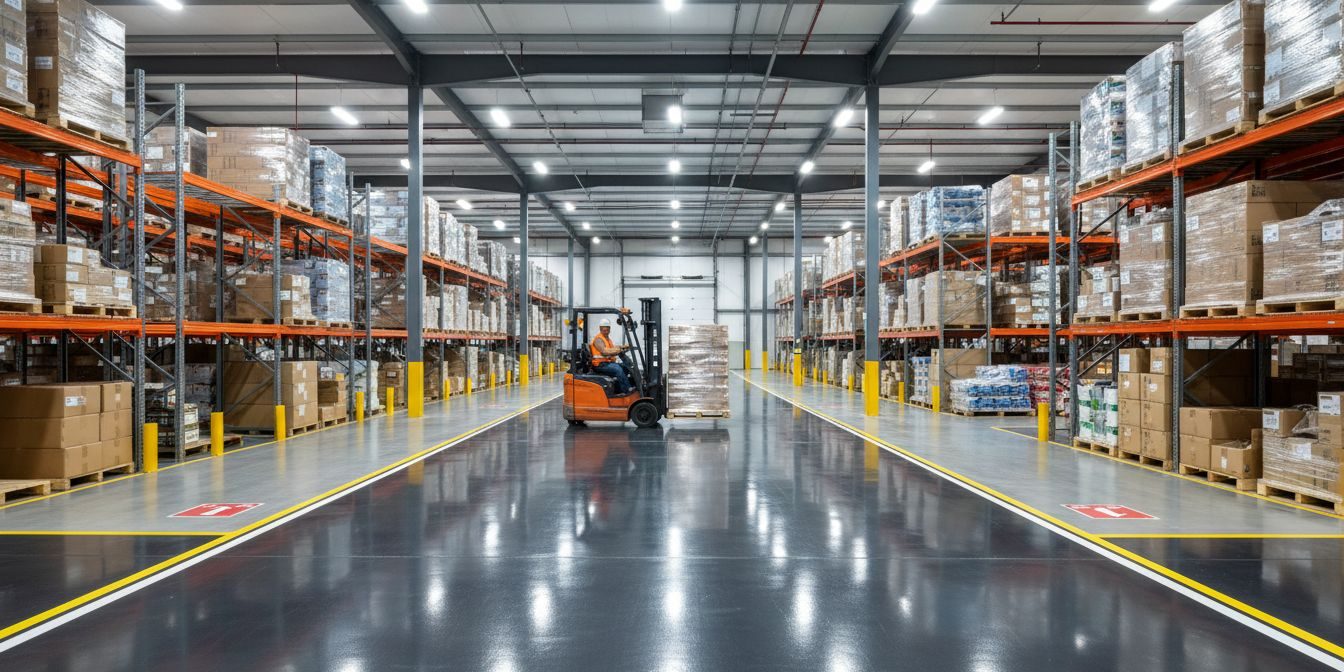
Orlando’s logistics industry is booming. With VanTrust Real Estate’s acquisition of the Sunbridge Industrial Park adding 1 million square feet of Class A warehouse and distribution space to the region, Central Florida is becoming a major hub for e-commerce, manufacturing, and last-mile delivery operations. But with this explosive growth comes a critical challenge: how do you protect your facility’s infrastructure from the constant wear and tear of forklifts, pallet jacks, chemicals, and high-traffic operations?
The answer lies in protective coatings for warehouses and distribution centers—specialized finishes that go far beyond standard paint. Whether you operate a logistics hub in Apopka, manage a distribution center near Orlando, or oversee a high-capacity industrial facility, the right coating system can dramatically extend your facility’s lifespan, reduce maintenance costs, and improve worker safety.
What Are Protective Coatings for Industrial Facilities?
Protective coatings are engineered finishes designed specifically for warehouses, distribution centers, and logistics hubs. Unlike basic interior or exterior paint, these systems are formulated to withstand:
- Abrasion from heavy equipment — forklifts, pallet jacks, and rolling carts
- Chemical exposure — oils, salts, cleaning agents, and spills
- Impact damage — dropped loads and equipment strikes
- Moisture and humidity — preventing concrete deterioration and mold growth
- High traffic — both foot and vehicle movement in loading docks and aisles
Common types of industrial protective coatings include epoxy, polyurethane, and hybrid systems. Each offers distinct advantages depending on your facility’s operational demands and environmental conditions.
Why Epoxy Coatings Dominate Warehouse Flooring
Epoxy is the industry standard for warehouse and distribution center floors—and for good reason. This two-part system creates a hard, durable bond with concrete surfaces that can handle continuous heavy-equipment traffic without chipping, peeling, or wearing down.
Key Benefits of Epoxy for Distribution Centers
- Extreme durability: Epoxy can withstand forklift tires, dropping heavy pallets, and constant foot traffic
- Chemical resistance: Protects concrete from oils, fuel spills, cleaning chemicals, and salt exposure
- Easy cleanup: Sealed epoxy floors prevent dust, debris, and contaminants from settling into the concrete
- Improved safety: High-visibility epoxy with anti-slip textures reduces slips, trips, and falls in high-traffic zones
- Light reflectivity: Bright epoxy finishes enhance visibility in large bay areas and reduce lighting costs
- Cost-effective: By protecting the underlying concrete, epoxy reduces long-term replacement and repair expenses
For logistics hubs managing e-commerce inventory or regional distribution for multiple tenants, epoxy flooring is an investment that pays for itself through reduced downtime and extended asset life.
Polyurethane Coatings: When Flexibility Matters
While epoxy is durable, polyurethane coatings offer greater flexibility and faster cure times—making them ideal for facilities that can’t afford extended downtime.
Why Polyurethane Works for Active Distribution Centers
- Rapid curing: Some polyurethane systems cure in hours, not days, minimizing facility closure time
- Flexibility: Better resistance to substrate movement and thermal expansion, reducing cracking
- UV resistance: Unlike epoxy, polyurethane won’t yellow or degrade under sunlight, making it suitable for exterior dock areas
- Superior clarity: Maintains color vibrancy longer, important for safety line-striping and branded floor markings
- Impact resistance: Handles heavy shock loads better than epoxy in extremely high-impact environments
For warehouses with tight operational windows or facilities with both indoor and outdoor loading dock areas, polyurethane systems provide practical advantages that justify the additional investment.
Specialty Coatings for Logistics-Specific Challenges
Modern distribution centers face unique operational demands that require specialized protective finishes:
Anti-Static Coatings
Data centers, electronics distribution, and pharmaceutical logistics require anti-static epoxy and polyurethane systems to prevent electrostatic discharge that could damage sensitive equipment or goods.
Food-Grade Protective Coatings
Cold-storage and temperature-controlled distribution centers need food-safe, moisture-resistant systems that prevent mold, bacterial growth, and off-gassing that could contaminate products.
Chemical-Resistant Systems
Hazmat-compliant facilities and distribution centers handling industrial products require specialty urethane and hybrid coatings formulated to resist aggressive chemicals, acids, and solvents without degradation.
High-Visibility Safety Coatings
Loading docks, forklift paths, and traffic zones benefit from color-coded epoxy and line-striping systems that clearly delineate safe routes, storage areas, and emergency zones—reducing accidents and liability.
The Cost of Skipping Protective Coatings
Unprotected concrete floors in warehouses and distribution centers deteriorate rapidly. Here’s what you risk without proper coatings:
- Concrete spalling: Moisture penetration and repeated impact create surface breakup, requiring expensive resurfacing
- Dust and contamination: Uncoated concrete sheds particles that contaminate products, reduce cleanliness standards, and create liability issues
- Chemical damage: Unprotected floors absorb oils, fuels, and cleaners, compromising structural integrity and creating safety hazards
- Increased maintenance: Uncoated facilities require constant cleaning, patching, and repairs—raising operational costs substantially
- Worker safety issues: Slippery, damaged floors increase slips, trips, and falls, elevating worker compensation claims and liability
With Orlando’s logistics boom driving new warehouse construction and facility expansions, skipping protective coatings is a false economy.
How to Prepare Your Facility for Professional Coating Application
Proper surface preparation is critical to coating success. Before any protective finish goes down, your facility must undergo thorough preparation:
Essential Prep Steps
- Concrete testing: Moisture meters verify that concrete is dry enough for coating adhesion
- Cleaning: Pressure washing removes dirt, oils, and contaminants that prevent bonding
- Grinding or shot-blasting: Creates a rough surface texture for maximum coating adhesion
- Crack repair: Concrete cracks are filled and sealed to prevent coatings from failing at weak points
- Priming: Moisture-sensitive epoxy and polyurethane systems require compatible primers
Inadequate surface prep is the leading cause of coating failure. Professional contractors in the Orlando area who understand Florida’s humid climate and unique concrete conditions know exactly how to prepare surfaces for long-lasting protection.
Why Partner with Experienced Industrial Painting Contractors
With over 21 years of professional experience serving Orlando, Apopka, and surrounding logistics hubs, Overtop brings deep expertise in warehouse and distribution center painting. The company specializes in protective coatings for high-traffic industrial facilities, understanding how moisture control, surface preparation, and material selection directly impact coating longevity in Florida’s demanding climate.
Licensed, insured, and known for 5-star quality on Google, Overtop delivers on-budget, on-time projects with a commitment to clean work areas and honest estimates. Their experience with commercial projects of all sizes means they can manage facility closures, work around operational schedules, and apply industrial coatings without disrupting your business.
Planning Your Warehouse or Distribution Center Coating Project
When evaluating protective coating projects for logistics hubs, consider:
- Facility usage patterns: Heavy forklift traffic requires heavier-duty epoxy; lower-impact environments may suit polyurethane
- Environmental conditions: Florida humidity and moisture demand systems rated for wet environments
- Operational constraints: Available downtime affects whether you choose rapid-cure polyurethane or standard epoxy
- Compliance requirements: Food-grade, anti-static, or hazmat-compliant coatings have specific material and application requirements
- Long-term budget: Premium systems cost more upfront but reduce maintenance and replacement expenses dramatically
Orlando’s explosive growth in warehousing and distribution is creating unprecedented demand for protective finishes. Facility managers and property owners who invest in quality coatings now will enjoy years of reduced maintenance, improved safety, and protected assets. In a region where 1 million square feet of new logistics space is coming online, protective coatings aren’t a luxury—they’re essential infrastructure for modern, efficient operations.


