


 407-450-2020
I need to retrieve the information from the previous steps to write this article. Let me gather all the necessary details.
Industrial Painting for Central Florida Logistics Hubs: Protective Coatings That Keep Distribution Centers Running
The I-4 corridor is booming. From Orlando to Apopka, Kissimmee, and beyond, logistics hubs and distribution centers are multiplying—driven by e-commerce growth, supply chain optimization, and Florida’s strategic position as a distribution gateway to the Southeast and Caribbean. But rapid expansion comes with a challenge: warehouses and fulfillment centers need protective, functional finishes that can withstand the punishing demands of 24/7 operations.
This is where specialized industrial painting makes all the difference. Whether you’re managing a new distribution facility, retrofitting an older warehouse, or upgrading safety markings in a busy cross-dock operation, the right protective coatings aren’t just cosmetic—they’re essential investments in durability, safety, and operational efficiency.
Why Industrial Painting Matters for Logistics Operations
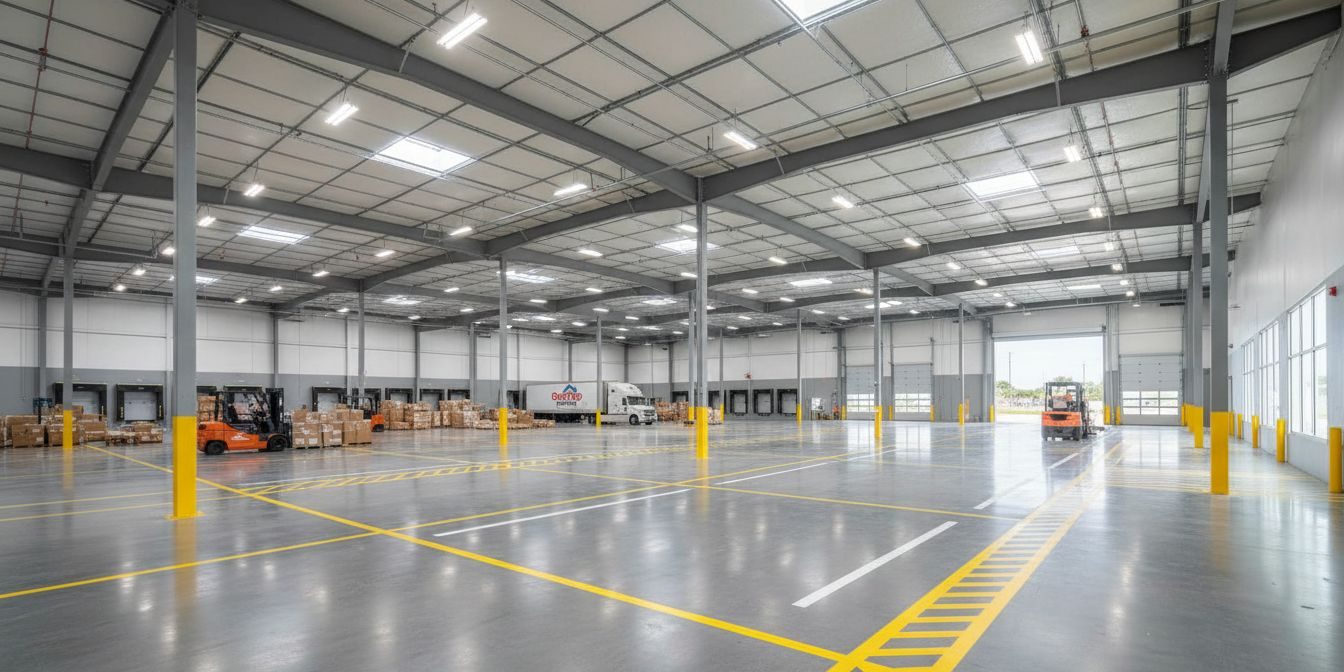
Distribution centers operate under extreme conditions. Forklifts, pallet jacks, and heavy equipment traffic wear down floors and lower walls. Loading docks face constant impact, chemical exposure, and weather cycles. Exterior structures battle intense Florida heat, UV radiation, and salt-laden air. Structural steel, concrete, and metal surfaces corrode without protection.
Protective, functional finishes solve these problems:
- Reduce downtime by preventing corrosion, spalling concrete, and structural degradation
- Improve safety through high-visibility markings, anti-slip coatings, and clear hazard zone identification
- Meet insurance and compliance requirements with fire-rated systems and OSHA-compliant safety striping
- Lower long-term costs by extending the life of warehouse infrastructure and reducing repair cycles
- Support facility presentation for tenant recruitment and retention
- Enable sustainability goals with low-VOC and reflective, heat-reducing coatings
For logistics operations in Apopka, Orlando, Kissimmee, and surrounding cities, quality industrial painting is no longer optional—it’s operational necessity.
The Central Florida Logistics Boom and Coating Demand
The numbers tell the story. Central Florida’s logistics sector is experiencing explosive growth. New warehouses, expanded 3PL facilities, and e-commerce fulfillment centers are sprouting along the I-4 corridor and near Orlando International Airport. Facility managers across the region are prioritizing durable, high-performance coatings systems.
This trend reflects several realities:
High-throughput operations demand durable finishes. When distribution centers move thousands of pallets daily, impact-resistant corner guards, anti-slip floor coatings, and protective wall systems become wear-prevention tools.
E-commerce retrofits require specialized solutions. Older warehouses being converted to modern distribution use new drywall, structural repair, and bright, reflective interior paints to improve lighting efficiency and worker safety.
Safety and compliance standards are tightening. Distribution centers must clearly mark emergency exits, establish slip-resistant loading ramps, and ensure high-contrast coatings in hazard zones—all requiring expertise in OSHA guidelines and local codes.
Sustainability initiatives favor eco-friendly coatings. Low-VOC paints and high-reflectance roof coatings reduce environmental impact while lowering energy costs in climate-controlled facilities.
Cold-storage and food distribution add complexity. Specialized antimicrobial coatings, moisture-tolerant systems, and non-skid finishes for refrigerated corridors demand contractors who understand food-grade requirements.
Apopka, Orlando, Winter Garden, Ocoee, and Davenport—all major nodes in Florida’s distribution network—are seeing unprecedented demand for experienced industrial painting contractors.
Interior Warehouse Coatings: Durability Under Heavy Use
Interior warehouse environments are brutal on standard paint systems. High-traffic aisles see constant abrasion. Loading docks experience impact from equipment and vehicles. Concrete floors must withstand forklifts, moisture, and chemical spills.
Epoxy and polyurethane floor coatings are industry standards for logistics facilities because they provide:
- Abrasion resistance to withstand heavy equipment traffic without peeling or worn spots
- Chemical tolerance to resist oils, solvents, and warehouse cleaning compounds
- Anti-slip properties to prevent accidents on smooth concrete (critical for OSHA compliance)
- Easy maintenance—minimal downtime for deep cleaning and recoating
Wall coatings in distribution centers serve practical purposes:
- Impact-resistant finishes on columns, corners, and loading dock entry points prevent dents and scuffs from forklifts and pallet jacks
- Bright, reflective paints improve visibility and worker safety in busy picking and staging areas
- Cleanable, durable surfaces withstand washdown cleaning required in cold-storage and food-handling facilities
- Moisture-tolerant systems prevent mildew and peeling in humid, climate-controlled environments
High-performance interior coatings aren’t commodities—they require proper surface preparation, application expertise, and selection of systems matched to specific warehouse conditions. A coating system that works for a dry goods distribution center may fail in a cold-storage facility. Proper diagnostics and material selection are essential.
Exterior Protective Coatings for Tilt-Wall and Metal Structures
Florida’s climate is hard on buildings. Intense UV radiation, wind-driven rain, salt spray (especially in coastal areas), and thermal movement stress exterior structures. Distribution centers along the I-4 corridor face additional challenges from vibration caused by highway noise and heavy equipment operation.
High-build exterior paints and elastomeric coatings protect tilt-wall structures and metal facades by:
- Expanding and contracting with temperature fluctuations without cracking
- Resisting UV degradation to prevent chalking, fading, and loss of protective properties
- Shedding water to prevent moisture intrusion and structural rot
- Protecting steel from corrosion through high-quality primer and topcoat systems
Reflective roof coatings are gaining traction in Central Florida’s industrial sector because they:
- Reduce heat gain by reflecting solar radiation, lowering cooling costs in large warehouses
- Extend roof membrane life by reducing thermal stress and UV exposure
- Support sustainability certifications and corporate environmental goals
- Improve worker comfort in facilities without full air conditioning
For distribution centers in winter-prone areas like Winter Springs, Clermont, and northern suburbs, proper exterior protection extends building life by decades and reduces emergency repairs that disrupt operations.
Loading Dock and Structural Steel: Impact and Corrosion Protection
Loading docks are high-impact zones. Trailers back in. Equipment operates in confined spaces. Concrete edges chip and spall. Metal structures rust.
Specialized loading dock coatings address these challenges:
- High-strength epoxy primer and topcoat systems prevent rust and corrosion on structural steel, beams, and metal columns
- Skid-resistant floor coatings prevent accidents on smooth concrete ramps and dock plateaus
- Impact-resistant corner and column protection reduces damage from equipment and vehicles
- High-visibility markings clearly delineate travel paths, hazard zones, and equipment staging areas
For busy cross-dock facilities in Kissimmee, Davenport, and Lake Mary, where equipment traffic is continuous, protective dock coatings are preventive maintenance that pays for itself through reduced structural failures and fewer safety incidents.
Safety Striping and OSHA Compliance
Distribution centers must meet strict OSHA requirements for walkways, emergency exits, and hazard zones. Paint isn’t just decoration—it’s a safety and compliance tool.
High-contrast safety markings accomplish multiple goals:
- Identify emergency exits clearly to meet OSHA egress requirements
- Mark aisles and pedestrian zones to separate foot traffic from equipment traffic
- Highlight hazards like low-hanging pipes, electrical equipment, and structural obstacles
- Establish equipment zones to prevent collisions and confusion in busy facilities
Safety stripe systems must use industrial-grade, reflective paints that maintain visibility under warehouse lighting conditions and remain durable through regular cleaning and equipment traffic. Poor safety striping creates liability; quality striping prevents injuries and supports operational discipline.
Specialized Coatings for Cold-Storage and Food Distribution
Cold-storage and food-handling facilities require compliance with specialized regulations. Temperature-controlled environments create humidity challenges. Equipment used for food processing demands antimicrobial protection.
Specialized systems for refrigerated facilities include:
- Moisture-tolerant, mold-resistant coatings that prevent mildew in cold, humid conditions
- Antimicrobial paint additives that inhibit bacterial and fungal growth on surfaces
- Non-skid floor systems rated for safe operation on cold, slippery surfaces
- Washdown-resistant coatings that withstand frequent cleaning with high-pressure equipment
Facilities in Sanford, St. Cloud, and surrounding Central Florida cities handling perishables or food products need painting contractors who understand these specialized requirements and can work within the operational constraints of temperature-controlled environments.
Low-VOC and Sustainable Coating Solutions
Environmental responsibility and corporate sustainability goals are driving demand for eco-friendly industrial coatings. Central Florida industrial parks and distribution centers increasingly specify low-VOC (volatile organic compound) paint systems.
Benefits of low-VOC and sustainable coatings:
- Improved worker safety through reduced chemical off-gassing
- Lower environmental impact from reduced air pollution
- Energy efficiency when combined with reflective roof and exterior finishes
- Compliance with green building standards like LEED certification
- Corporate sustainability reporting supporting ESG (Environmental, Social, Governance) goals
Modern low-VOC industrial coatings perform as well as conventional systems while supporting environmental and health objectives. For logistics companies and facility managers in Orlando, Winter Park, and surrounding areas prioritizing sustainability, these systems deliver both performance and values alignment.
Choosing the Right Industrial Painting Contractor
Not all painters can handle industrial logistics facilities. Specialized knowledge, experience, and equipment are essential.
Look for contractors who demonstrate:
- Experience with logistics and warehouse environments—understanding the specific demands of distribution centers
- Knowledge of OSHA compliance and safety marking standards
- Expertise in epoxy, polyurethane, and high-performance coating systems
- Ability to work in operational facilities without disrupting 24/7 distribution operations
- Understanding of coatings selection for specific warehouse conditions (temperature, humidity, chemical exposure)
- Track record of on-time completion and quality workmanship
- Proper licensing, insurance, and bonding for commercial and industrial projects
Overtop, with over 21 years of professional painting experience and a 5-star reputation in the Orlando area, brings the expertise needed for industrial logistics facilities. Based in Apopka, Overtop serves distribution centers and warehouses across Central Florida, including Orlando, Kissimmee, Winter Park, and surrounding cities. The company’s full-service offerings—interior and exterior painting, drywall installation and repair, pressure washing, and restoration—align perfectly with the comprehensive needs of modern logistics hubs.
Planning Your Warehouse Painting Project
Successful industrial painting projects require careful planning:
1. Conduct a facility audit. Assess current coating conditions, identify problem areas, and determine coating specifications needed for each zone.
2. Develop a scope of work. Define surface preparation requirements, coating systems to be used, and work sequencing to minimize operational disruption.
3. Schedule strategically. Plan around your facility’s busiest periods. Many distribution centers benefit from night or weekend work to avoid daytime throughput impacts.
4. Select the right contractor. Choose a painting company experienced with logistics facilities, capable of managing large projects, and committed to quality and safety.
5. Establish clear communication. Ensure expectations are aligned on timeline, quality standards, cleanup, and operational impacts.
6. Plan for ongoing maintenance. Protective coatings require periodic inspection and touch-up to maintain performance and extend service life.
The Bottom Line: Protective Coatings Drive Efficiency and Safety
Central Florida’s logistics boom shows no signs of slowing. As distribution centers expand and e-commerce demand grows, facility managers across Orlando, Apopka, Kissimmee, and surrounding areas are recognizing that quality protective coatings aren’t optional upgrades—they’re essential investments in operational efficiency, safety, and long-term asset value.
Whether you’re opening a new warehouse, retrofitting an older facility, upgrading safety markings, or protecting structural elements from Florida’s challenging climate, the right industrial painting contractor makes all the difference. Quality coatings reduce downtime, prevent costly repairs, protect worker safety, and support your facility’s long-term performance.
Your distribution center operates in one of the nation’s most dynamic logistics regions. Give it the protective finishes it deserves.


