


 407-450-2020
I need to retrieve the specific information from the previous workflow steps to create your blog post. Let me gather that data now.
Orlando School Painting Services: Lead-Safe, Durable Finishes for Educational Facilities
Schools, daycares, and universities in Central Florida face a unique painting challenge: creating safe, durable learning environments while minimizing disruption to students and staff. Whether you’re managing an aging facility built before 1978 or modernizing a newer campus, choosing the right paint and contractor can make the difference between a beautiful space that lasts decades and a project that becomes a recurring headache.
This guide explains why lead-safe painting practices, low-VOC coatings, and durable finishes are essential for educational facilities in Orlando, Winter Park, Kissimmee, and surrounding areas—and how to work with experienced contractors like Overtop to protect your students, staff, and budget.
Why School Painting Requires Special Expertise
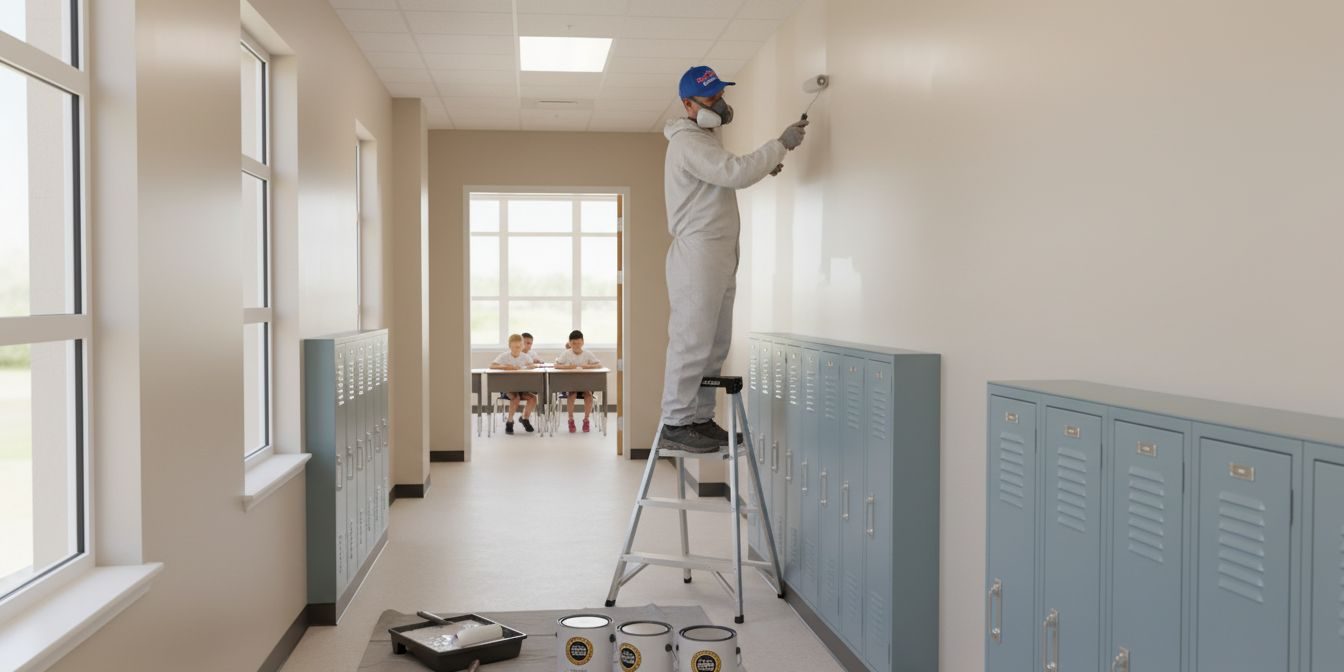
Schools aren’t typical commercial spaces. They house children and staff for 180+ days per year, demand fast turnaround during breaks, and face constant wear from high traffic, moisture, and frequent disinfection.
Key painting challenges in educational facilities:
- Children’s vulnerability to paint fumes: Young lungs are still developing; exposure to volatile organic compounds (VOCs) from traditional paints can trigger respiratory issues, headaches, and allergic reactions.
- Lead contamination in older buildings: Schools built before 1978 often contain lead-based paint. Improper removal or disturbance spreads toxic dust and creates liability.
- High-traffic durability: Hallways, cafeterias, gyms, and bathrooms endure constant scuffing, stains, and aggressive cleaning—requiring coatings that resist damage without compromising safety.
- Scheduling constraints: Work must be completed during summer, winter, or spring breaks to avoid classroom interruptions and health risks to occupants.
Overtop’s 21+ years of experience in Central Florida means understanding these specific demands. The company’s licensed, insured crew knows how to execute projects on time, on budget, and with zero safety compromises.
Lead-Safe Practices: Protecting Pre-1978 Buildings
If your school or daycare was built before 1978, lead-based paint is likely present on walls, trim, windows, and doors. Federal law (including EPA RRP Rule and OSHA standards) requires contractors to contain, encapsulate, or safely remove lead without spreading contamination.
What lead-safe painting includes:
- Professional lead testing – Certified inspectors identify lead-based paint before any work begins.
- Containment barriers – Plastic sheeting, air scrubbers, and sealed work zones prevent lead dust from spreading to occupied areas.
- Proper disposal – Contaminated materials are removed as hazardous waste, not dumped in regular trash.
- HEPA filtration and vacuuming – High-efficiency particle air filters capture microscopic lead particles during and after work.
- Final clearance testing – Post-project wipe tests confirm dust levels meet EPA safety standards before students and staff return.
This isn’t just compliance—it’s protection. Lead exposure causes permanent developmental damage in children, even at low levels. Overtop’s fully licensed and insured approach means you’re working with a contractor trained to handle pre-1978 buildings correctly.
Low-VOC Coatings: Healthier Indoor Air Quality
Traditional paints off-gas VOCs for weeks or months after application, creating lingering chemical odors and potential respiratory stress for occupants. Low-VOC paints dramatically reduce these emissions, delivering safer indoor air quality while still providing excellent durability and finish quality.
Benefits of Low-VOC Paints for Schools
Health protection: Low-VOC formulations contain 50–100 grams of VOC per liter (or lower), compared to 300+ grams in conventional paints. This reduces the risk of headaches, asthma triggers, and allergic reactions in students and staff.
Faster occupancy after painting: Many low-VOC paints dry to reoccupancy in 4–8 hours versus 24+ hours for traditional products. This is critical for summer painting projects where you’re racing against the school calendar.
Durability without compromise: Modern low-VOC formulations—especially those certified by GREENGUARD or equivalent standards—offer washability, scuff resistance, and stain resistance equal to or better than conventional paints.
Cost efficiency over time: Though low-VOC paints may cost slightly more upfront, their superior durability and scrubbability reduce touch-ups and repainting cycles, lowering total cost of ownership.
GREENGUARD and EPA Certifications
When specifying paint for educational facilities, look for:
- GREENGUARD Gold certification: Stringent limits on VOCs and harmful chemicals; recognized for child-safe environments.
- EPA Safer Choice: Products that meet EPA toxicity and environmental standards.
- UL GREENGUARD: Third-party verification of low-chemical emissions over time.
Overtop recommends these certified products for all school and daycare projects. By 2026, low-VOC and antimicrobial coatings have become the standard for Orlando-area educational facilities, reflecting evolving health codes and facility managers’ commitment to student wellness.
Durable Finishes for High-Traffic Areas
Classrooms, hallways, cafeterias, gymnasiums, and restrooms endure punishment that typical commercial spaces never face. Proper paint selection and surface prep ensure finishes survive years of scuffing, staining, and aggressive cleaning without peeling or fading.
Paint Specifications by Space
Hallways and corridors: Use scuff-resistant, semi-gloss or satin enamels rated for high traffic. These finishes shed marks from carts, wheelchairs, and furniture slides while remaining washable for routine maintenance.
Classrooms and learning spaces: Flat or matte finishes with excellent hide and color retention; low-VOC acrylic latex for safety. Anti-microbial additives reduce bacteria transfer in frequently touched areas like door frames.
Cafeterias and food service areas: Semi-gloss finishes with mold and mildew resistance. Moisture-tolerant primers prevent peeling in humid kitchens and serving lines.
Gymnasiums and athletic facilities: High-durability, impact-resistant coatings that withstand bleachers, equipment impacts, and constant activity. Satin or semi-gloss finishes handle sweat and moisture.
Restrooms and locker rooms: Moisture-tolerant primers and semi-gloss or gloss finishes with antimicrobial protection. Ventilation upgrades paired with proper paint selection prevent mold and odors.
Surface Preparation: The Foundation of Lasting Results
Poor surface prep is the #1 reason school painting projects fail. Overtop’s licensed crew understands that durable, long-lasting finishes start with meticulous surface preparation:
- Repairing drywall damage, cracks, and moisture damage before painting.
- Removing chalky or peeling old paint down to sound substrate.
- Sanding and priming bare spots to ensure uniform finish.
- Blocking stains with primers to prevent bleed-through that ruins new paint.
- Using moisture-tolerant primers in bathrooms and kitchens where moisture penetration is a risk.
This upfront work prevents costly touch-ups and premature repainting within 3–5 years. Orlando’s humid subtropical climate makes proper priming and sealing non-negotiable for educational facilities.
Strategic Scheduling: Working Around the School Year
School painting projects must balance quality with minimal disruption. Overtop coordinates closely with facility managers to plan work during breaks that align with your calendar.
Summer repainting (typical June–August window):
- 8–10 weeks available for most schools; ideal for large multi-building projects.
- Hot, humid weather requires accelerated drying schedules and extra ventilation.
- Contractors often work extended hours to complete before students return in late August.
Winter break (December–January):
- 2–3 weeks available; suitable for quick touch-ups, selective room repainting, or small-scale projects.
- Cooler temperatures can slow drying but reduce humidity-related issues.
Spring break (1–2 weeks):
- Limited window; best for urgent repair or single-room projects.
- Back-to-back days of early-morning start and evening completion.
Off-hours work during school year:
- Evening and weekend painting in occupied buildings using low-odor, fast-drying products.
- Requires strict safety protocols: contained work zones, air scrubbers, and minimal student/staff exposure.
Overtop’s experience managing OCPS (Orange County Public Schools) and University of Central Florida campus projects means your painting stays on schedule without sacrificing safety or quality.
Lead-Safe Work in Aging Central Florida Schools
Many Orange County schools, especially those built in the 1960s and 1970s, contain lead-based paint. Overtop has completed dozens of compliant lead-abatement painting projects across Orlando, Winter Park, Kissimmee, and surrounding districts.
Common lead-paint locations in older schools:
- Interior and exterior trim work
- Door and window frames
- Cafeteria and kitchen surfaces
- Mechanical room pipes and fixtures
- Athletic facility equipment and railings
Overtop’s lead-safe process:
- Certified lead inspection identifies all affected areas.
- Pre-project hazard assessment and containment planning.
- OSHA-trained, background-checked crews execute contained removal or encapsulation.
- Daily cleaning and HEPA vacuuming minimize dust spread.
- Final EPA clearance testing confirms safe occupancy.
This meticulous approach protects students, staff, and your institution’s legal liability.
Moisture Control and Mold Prevention
Florida’s humidity and frequent rain make moisture management critical in schools. Bathrooms, locker rooms, kitchens, and mechanical spaces prone to dampness require moisture-tolerant primers and ventilation-friendly paint systems.
Moisture-resistant primer benefits:
- Prevents peeling and blistering caused by moisture vapor passing through old paint.
- Blocks mold spores and mildew from taking hold beneath the paint film.
- Works best paired with proper mechanical ventilation (exhaust fans, HVAC upkeep).
Overtop specifies primers that seal porous substrates and resist moisture, especially in bathrooms and food service areas where humidity spikes and cleaning involves water spray.
What Makes Overtop Ideal for School Painting Projects
Licensed and insured: Full commercial liability and workers’ compensation coverage—essential when working on educational campuses.
21+ years of Central Florida experience: Overtop understands local school schedules, climate challenges, and compliance requirements.
5-star Google rating: One of the few painting companies in Orlando with a consistent 5-star reputation for quality and reliability.
Detail-oriented craftsmanship: Overtop’s crew pays meticulous attention to surface prep, finish quality, and customer satisfaction.
On-time, on-budget delivery: No surprise fees or scope creep—just honest estimates and professional execution.
Low-VOC and antimicrobial expertise: Overtop stays current with 2026 standards for safe, durable school coatings.
Frequently Asked Questions About School Painting
Q: How long does it take to paint a typical school building?
A: Timeline depends on building size, surface condition, and lead abatement needs. A 50,000-sq-ft school might take 4–6 weeks with a full crew working 5 days per week. Overtop provides detailed timelines during the initial site assessment.
Q: Can Overtop paint during the school year?
A: Yes, using off-hours and low-odor products, though summer is ideal. Work scheduling is customized to your facility’s operational needs.
Q: What certifications should I look for in paint for daycares and schools?
A: Seek GREENGUARD Gold, EPA Safer Choice, or equivalent labels. Low-VOC content (≤50 g/L) and antimicrobial properties are now standard for educational facilities in Central Florida.
Q: How often should schools repaint interior spaces?
A: High-traffic areas (hallways, cafeterias) typically need refreshing every 5–7 years with quality low-VOC finishes. Proper surface prep and durable paint extend this cycle.
Q: Do you handle lead-safe work?
A: Absolutely. Overtop is trained and licensed for EPA RRP Rule compliance, lead inspection, containment, and safe removal in pre-1978 buildings.
Conclusion: Invest in Safe, Durable School Painting
Creating a bright, safe, and durable learning environment starts with choosing the right contractor and paint system. Schools in Orlando, Winter Park, Kissimmee, and surrounding areas deserve painting services that prioritize child health, compliance, and long-term durability.
Overtop combines 21+ years of experience, lead-safe expertise, low-VOC product knowledge, and meticulous craftsmanship to transform aging or worn school facilities into spaces where students thrive. Whether you’re managing pre-1978 lead-paint challenges, upgrading to modern durable finishes, or scheduling summer repainting around the school calendar, Overtop’s licensed, insured crew delivers on time, on budget, and to the highest standards.
Contact Overtop in Apopka to discuss your school or daycare’s painting needs and receive a detailed, honest estimate.


